.jpg)
Resilience on a Mixed Farm - Sarah Bell
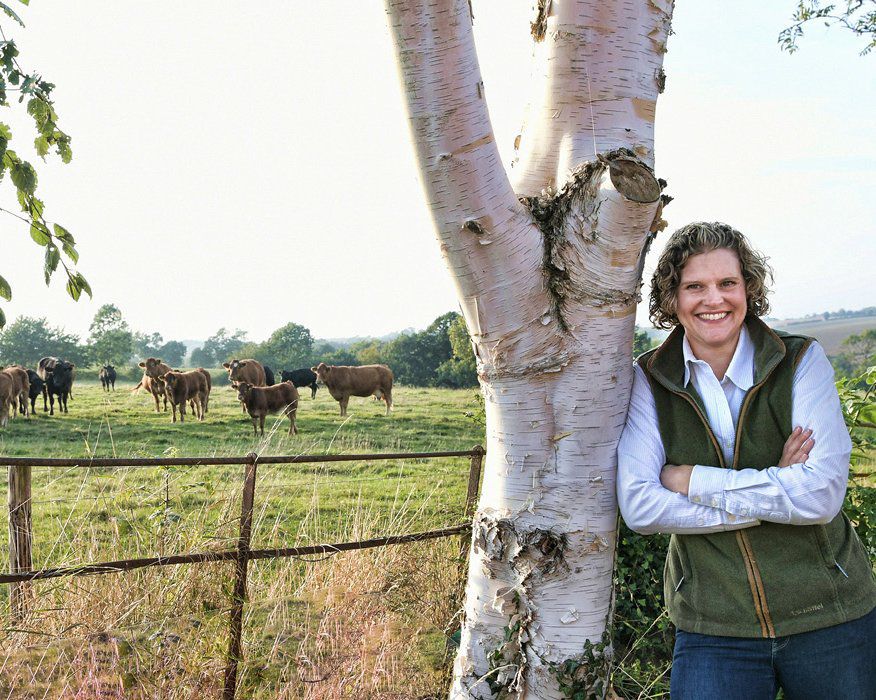
Sarah is one of our Be The Change Farmers. Here she tells us in her own words some of the challenges they are facing on farm in a changing climate.
Running a mixed farm in Rutland has always required a steady hand and a long view. We grow wheat, barley, oats and beans, and we keep cattle and sheep. The mix has served us well for generations. It spreads risk, balances workloads and keeps the land in good heart. Yet the last decade has shown that even a diverse system is not immune to the pressures of a changing climate and a more demanding operating environment.

Weather patterns are becoming harder to predict. Seasons that once followed a familiar rhythm now swing between extremes. A wet autumn delays drilling. A dry spring checks growth. A hot summer stresses livestock and grassland. None of this is new to farming, but the frequency and intensity are shifting. It is no longer enough to rely on past experience. We need to understand how these pressures interact with the whole business and make deliberate choices about how we adapt.
The first step has been accepting that climate risk is now a permanent feature of our planning. We cannot remove it, but we can understand it better. For our arable crops this means looking closely at soil structure, rotation design and the timing of operations. We are exploring how different crop mixes and establishment methods might reduce vulnerability to difficult seasons. For livestock it means thinking about grazing management, forage security and the resilience of our housing and handling systems.

Future Planning
Alongside this sits the wider question of business strategy. A mixed farm has many moving parts. Decisions about cropping affect labour, machinery and cash flow. Decisions about livestock affect grazing, feed, infrastructure and the long-term direction of the business. We are taking time to look at how these pieces fit together and whether the balance that worked in the past is still the right one for the future.
Part of this work involves understanding the pressures felt by the people connected to the farm. Family members, staff, advisers and customers all see different parts of the picture. Their concerns often highlight areas that need attention. Some issues can be addressed directly. Others are structural and need to be acknowledged without allowing them to dominate. Being clear about which is which helps keep our planning focused.
We are also looking outward. Banks, insurers, suppliers and policymakers all influence the environment in which we operate. Their expectations shape what is possible and what carries risk. Taking time to understand these relationships helps us avoid surprises and ensures that any major change is aligned with the realities of finance, regulation and supply chain capacity.
A key part of our approach has been developing a clearer way of assessing value. Hard value is easy to measure. Yield, margin and cost per head all have numbers attached. Soft value is harder but just as important. Confidence, clarity, staff wellbeing and long term soil health all influence the resilience of the business. Bringing these elements together in a structured way helps us make decisions that are both practical and sustainable.
Gut feeling
Finally, we are paying attention to instinct. Within any farm business there are people who sense the direction of travel before it becomes obvious. They may have early ideas about what needs to change or where opportunities lie. Listening to these views helps validate our thinking and sometimes reveals blind spots we had not considered.
Resilience is not a single project. It is a way of thinking. On our farm in Rutland it means stepping back, understanding the whole system and making choices that strengthen the business for the long term. Climate change is reshaping the landscape, but with clear thinking and steady planning, we can adapt, evolve and continue to produce food with confidence.
Comments